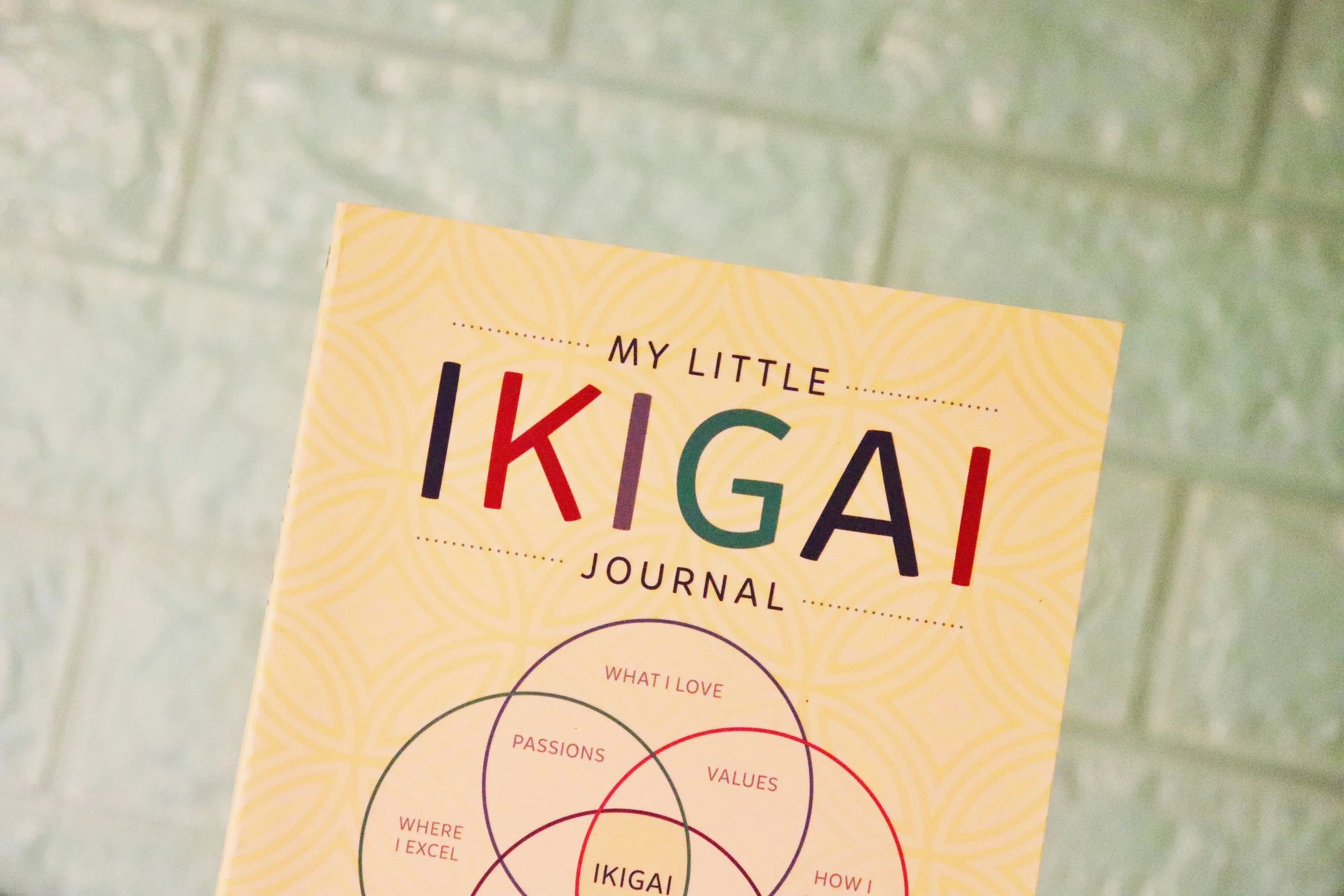
Image by Acy Ian Malimban on Unsplash
I was introduced to the term several years ago by Anna S. Lundberg, a coach for founders and leaders. I just checked and it was an episode from her podcast six years ago (listen to the episode here and download her graphic).
As she put it, your ikigai sits at the sweet spot where the following four things intersect:
What you’re good at (your skills and personality strengths).
What you love (passions and interests, the work that you really enjoy, what would your ideal day look like).
What the world needs (you need to be solving a problem and making a meaningful difference).
What you can be paid for (for this to be a business, you need to monetise it).
This four-part model is a useful framework for reflecting on career and purpose, but the concept has a broader, more personal meaning in Japanese culture, which I address towards the end of this post.
Reflections during the pandemic
Here were my answers back in 2020, during the pandemic:
Writing, editing, content marketing, photography, good with people (support, social, networking), listening, good with animals, horse riding, animal handling, climbing.
Helping people, artistic expression (photography, writing).
Better mental health, kindness, beauty.
God knows (social worker, communications professional, photographer, horse trainer or riding instructor).
So how do these answers look to me now, six years on? Are they still relevant? How do I feel about my life and how it looks now?
But first, some context about where I was just a few years ago.
Starting down a new career path
The title of a blog post I wrote in April 2023 strikes me as relevant here: Close to nature: Helping people and writing books.
I had just been offered a summer job at a high-security prison in Bergen, and I had applied to the only school in Norway for becoming a prison officer.
As I said at the end of it:
“Instead of waiting around to land that perfect part-time communication position that I know won’t show up, I decided to turn my passion for helping people into something I can get paid to do. (…) If I could have it my way, I would do a job that helped people make it through the day. And I would write articles and books. I would take photos that inspire people to get out into nature and experience the world.”
I also published my first book in January 2023, The Eye of the Woods, that I displayed at the Bergen Art Book Fair. And I ended the blog post with advice to my readers: “Be who you want to be. Get out into nature to be with yourself in a safe place. It starts inside of you. And it starts now.”
Well, six years on, reading all this, I feel like I have found my ikigai. Or rather that I have made my way towards a life that feels purposeful and motivating. I do help people, on a daily basis, and I write books too. This year I participated in the Bring your own book fair (Byobfair 2026) in Amsterdam with my second poetry and nature photography book, What the Water Hides and Reveals.
My ikigai now
Image by Andrew lvov on Unsplash
Answering the same questions now looks like this:
Communicating, adapting, writing, editing, photography, good with people (listening, communicating, support, networking), good with animals, horse riding, animal handling, climbing.
Helping people, artistic expression (photography, writing), horse riding, hiking, meeting new people and travelling.
Better mental health, kindness, beauty, rehabilitated prisoners who can live a life without crime.
Prison officer, and one day a first officer or prison (programme) manager, female leader, writer & photographer, and horse trainer.
Looking at the two sets of answers, I realise that the fundamentals haven't changed that much. The same interests, strengths and values were there six years ago. What has changed is how I have found a way to put them into practice.
I didn't need to reinvent myself. I needed to find a context in which more of who I am could be expressed and put to good use.
My second career has turned out to be a good match for my skills, personality and need for meaningful work. It allows me to help people on a daily basis, while leaving room for the creative and adventurous sides of myself outside work.
At 41, I feel that I am in tune with my ikigai. This is my version of saving the world. Helping one incarcerated person at a time and taking it one step at a time. Expressing my emotional side artistically, through my poetry and photography book projects and through drawing. Inspiring others to connect with nature and with their deeper selves.
The importance of horses and animals generally in my life is the subject of another post. For now, let it suffice to say that being in nature on horseback is my idea of heaven and where I find peace, joy and freedom. It is more than a hobby, it is essential to my well-being. I have put on hold my climbing and mountaineering activities the last couple of years, I just had to prioritise differently.
And my yet to-be-expressed musical soul remains somewhat caged, so this is an area I need to invest some time and energy. It comes with the advantage of taking place at home, compelling me to spend more time at home and getting more rest,
But something will have to give. My struggle with not having enough hours in the day for all that I want to do is a constant in my life. Always something to get better at, in my case the discipline to leave work and to prioritise better.
Looking back, I realise that finding my ikigai wasn't just about choosing the right career. It was also about understanding what makes me feel alive, what I want to contribute, and how I want to spend my time. Such reflections can be valuable for anyone.
Why is defining your ikigai important?
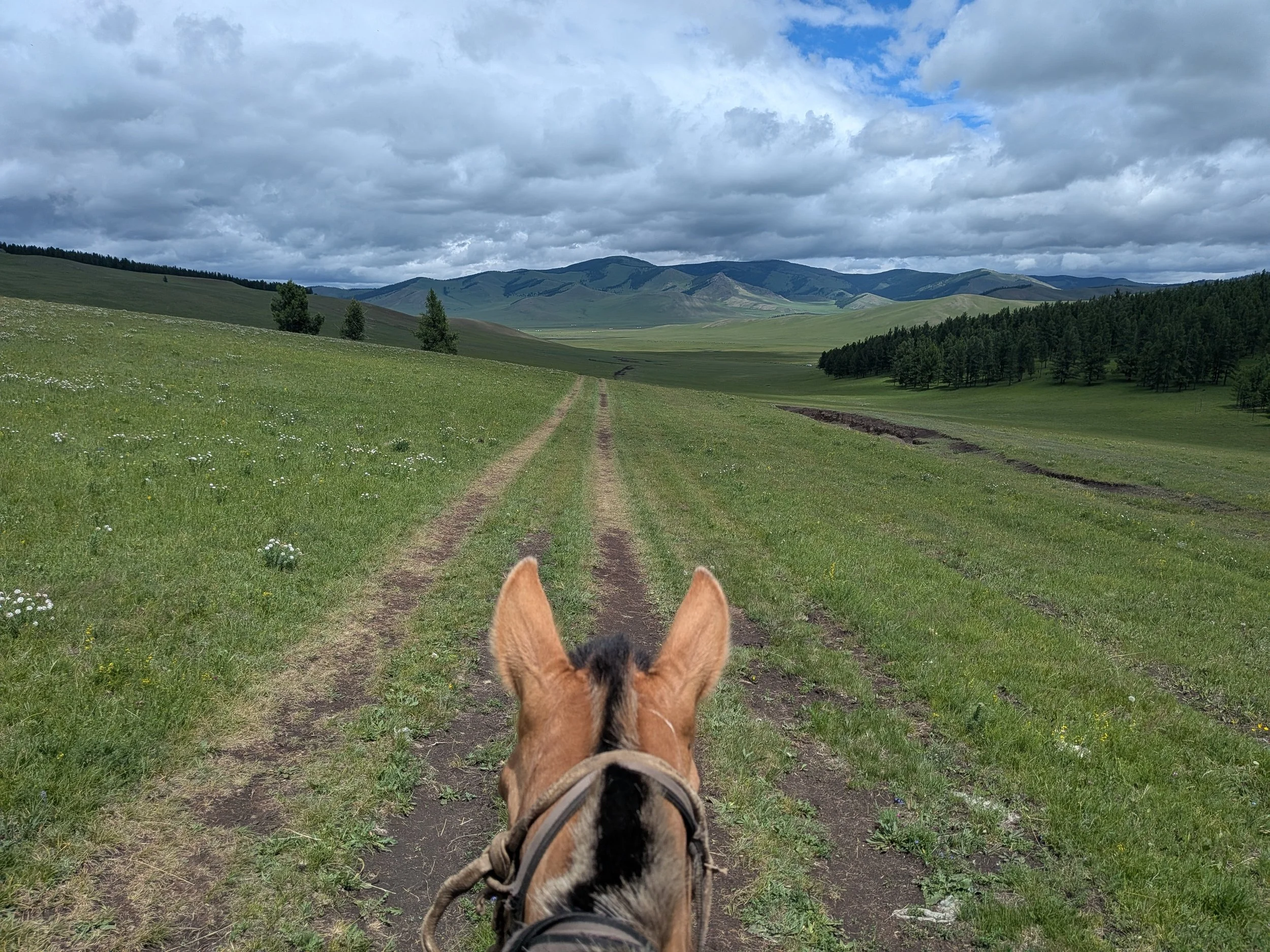
Image taken by Eleanor Smith in Mongolia, summer 2026.
Wikipedia puts it well: ikigai compounds two Japanese words, and together they mean a “raison d’être” in French, a meaning for life. Who doesn’t want to figure out the meaning of life? Not of all life on earth, or the meaning of the universe itself and humans as a species in it, but the meaning of the only life we have some control over, our own.
Thinking about and brainstorming to find your ikigai is a useful reflective exercise. Our lives are so busy and if we don’t take a step back every now and again, we risk getting to the end of the race and realising that we never stopped to think about whether this was the right road for us. I can’t think of something more tragic than wasted potential. But to be conscious of your potential, you must put some work in. Auto pilot will unlikely lead you there.
You have a unique set of skills, knowledge, personality strengths that you can apply to something you love and are good at, something that comes easily to you. Here there can be many things, and if you look hard enough, there will be a way of making a living out of one of those aspects.
And for the other aspects of self, consider how you will express them and plan how to make time for them. These priorities and plans can change as needed. Nothing needs to be set in stone, immovable and forever.
And finally, the world needs a lot of positivity, so find yours and make your contribution to the world. We all need you to find what that is and thrive!
This four-part model is a useful framework for reflecting on career and purpose, but ikigai is more than this. The concept has a broader meaning in Japanese culture, where it isn't necessarily connected to work, productivity or earning a living.
We don't necessarily need to find one grand purpose that explains everything. Sometimes meaning is found in the small things and the moments when we feel fully present.
Finding ikigai in the small things
Image by Sia Zhang on Unsplash
While reading up about ikigai on the web, I came across a website that explained how the term has been westernised.
According to Japanese Rituals, for the Japanese, “ikigai is about the small things”, such as a quiet morning with coffee or tending a plant, engaging in a heartfelt conversation, or simply showing up for those who rely on you. This view highlights its humble and realistic nature.
Finding your ikigai needn’t be about finding answers to the big, existential questions. Maybe it will make sense after a while of taking care of the small things. This perspective takes away the pressure of having to find one defining purpose in life. Instead, it encourages us to cultivate several sources of meaning and fulfilment, building a more balanced and resilient life that doesn't depend on any single aspect.
There are many ways of having agency in your life, not just thumbling through it. Daily practices such as morning intentions, a meditation practice, an act of service, one step in your craft, a moment of stillness, or time spent in nature. An evening reflection about your day, thinking about what you are pleased with, what you can do better next time, and three things you are grateful for.
Big changes often take time to materialise. In the meantime, there are all the small decisions that we make along the way, they shape our habits, influence our thinking and determine the direction of our lives. You get a little closer every day, provided you are conscious of how you move through life.
Perhaps finding your ikigai isn't about arriving at a final destination after all. Perhaps it is about creating a life that feels meaningful, one small decision at a time.
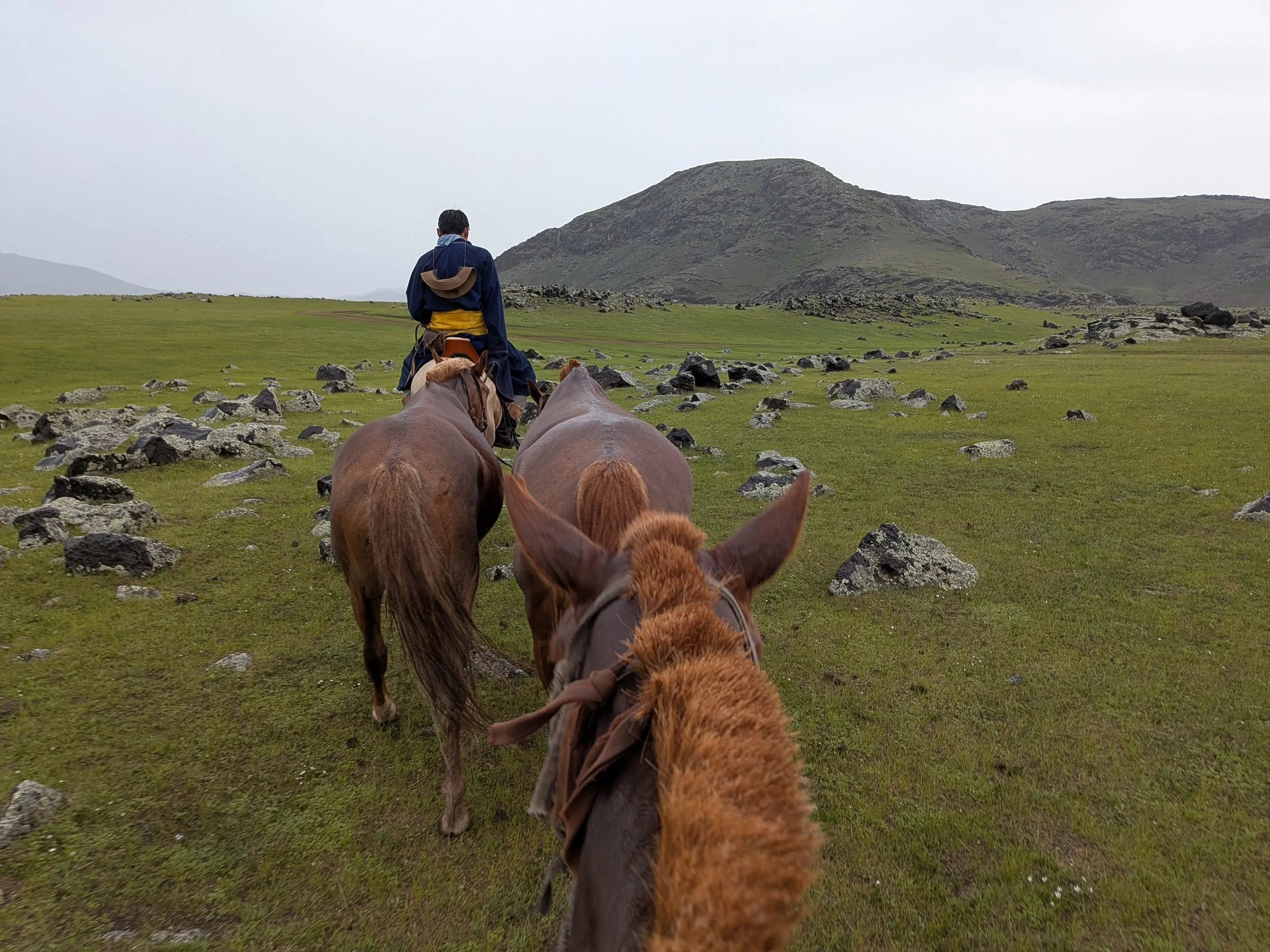
Image taken by Eleanor Smith in Mongolia, summer 2026.